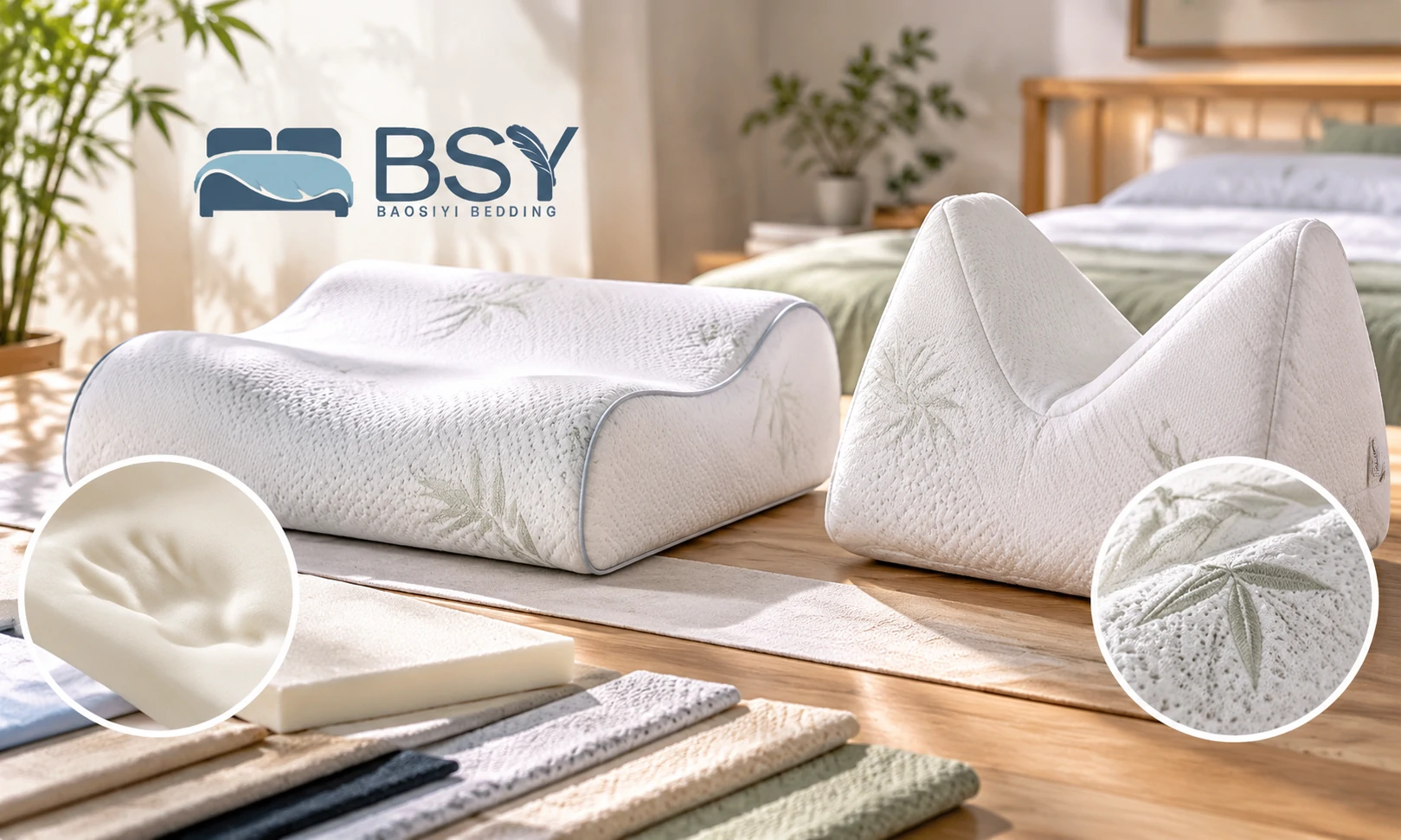
Ergonomic Cervical Pillows: Manufacturing Standards and Wholesale Sourcing Guide
October 27, 2026In the modern wellness economy, sleep is no longer viewed merely as passive rest; it is recognized as a vital pillar of preventive healthcare. Across global retail markets, consumer demand for sleep products that actively support physical alignment, relieve chronic pain, and improve posture has skyrocketed.
At the center of this functional sleep revolution is the Ergonomic Cervical Pillow.
Unlike conventional residential bedding—which utilizes uniform, flat stuffing that collapses under weight—ergonomic pillows are precision-engineered therapeutic tools designed to cradle the head, support the cervical spine, and maintain neutral spinal alignment throughout the night.
For orthopedic bedding brand founders, medical supply wholesalers, and commercial procurement directors, sourcing ergonomic pillows represents an exceptionally high-margin market opportunity. However, producing medical-grade orthopedic pillows requires strict adherence to foam chemistry, aluminum mold engineering, and rigorous ergonomic geometry.
This technical manufacturing and wholesale sourcing guide examines spinal alignment science, high-low contour structures, specialty shapes such as V-shape and L-shape body pillows, and the essential factory specifications required to build a dependable orthopedic bedding program.
1. The Anatomy of Neck Pain: Cervical Spine Alignment Science
To specify an ergonomic pillow successfully, commercial buyers must first understand the mechanical requirements of the human cervical spine during sleep.
The Natural C-Curve of the Cervical Spine
In a healthy human anatomy, the cervical spine forms a natural forward-facing C-shaped curve (lordosis):
- When an individual lies on a conventional flat, unsupportive pillow, gravity forces the head backward while the unsupported neck sags downward.
- This imbalance places constant tensile strain on the cervical ligaments and traps the trapezius muscles in a state of continuous nocturnal contraction, causing morning stiffness, tension headaches, and long-term joint degeneration.
Side Sleeping vs. Back Sleeping: The Dual-Height Dilemma
A major structural challenge in pillow design is accommodating different sleeping postures:
- Back Sleepers require a shallow central cradle to keep the head level, paired with a firm, supportive lower lobe that tucks snugly underneath the neck curve.
- Side Sleepers require a significantly higher lateral loft to fill the vertical gap between the mattress surface and the outer edge of the shoulder, keeping the spine straight horizontally.
Ergonomic cervical pillows solve this structural dilemma through asymmetric, multi-zoned molding.
Clinical Objectives of Orthopedic Neck Traction
The primary clinical objective of an ergonomic support pillow is passive nocturnal traction: gently stretching the cervical vertebrae to relieve intra-discal pressure, open nerve passageways, and restore natural spinal alignment without requiring conscious muscle effort from the sleeper.
2. Core Ergonomic Geometries: Contour Waves, V-Shapes, and L-Shapes
Different therapeutic applications demand distinct geometric configurations. A comprehensive wholesale catalog should encompass several specialized shapes:
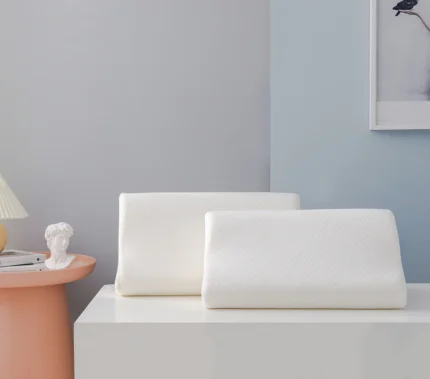
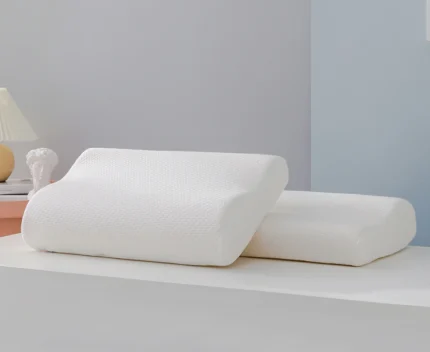
The Classic Cervical Wave (High-Low Contour Molded Design)
The foundational standard for orthopedic sleep:
- Features dual-height parallel lobes along the outer edges (e.g., a low 9 cm side and a high 11 cm side) with a scooped central depression.
- Allows sleepers to test and select their preferred neck support height simply by rotating the pillow 180 degrees.
- Ideal for back and side sleepers seeking posture correction and chronic pain relief.
V-Shaped Orthopedic Pillows: Nursing, Reading, and Spinal Support
The V-shape pillow is a specialized asymmetrical format widely utilized in healthcare and home retail:
- Features a symmetric, winged V-configuration designed to wrap around the user’s upper body.
- Primary Applications: Provides stable lateral back support for reading in bed, acts as an ergonomic nursing pillow for postpartum mothers, and serves as an anti-roll positioning support in eldercare facilities.
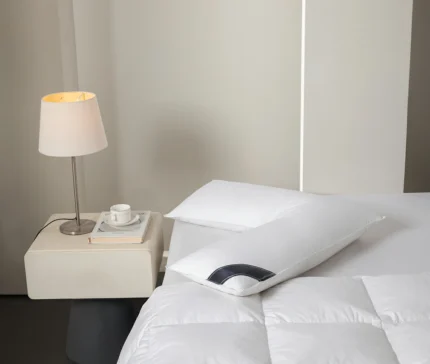
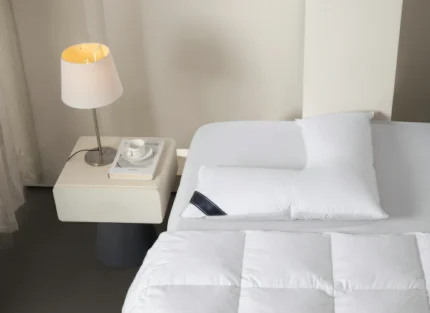
L-Shaped and Bolster Body Pillows: Maternity and Side-Sleeper Alignment
- L-Shaped Pillows: Combines a standard head pillow with an extended vertical side wing that supports the chest, relieves shoulder pressure, and tucks between the knees to align the pelvis and spine during pregnancy.
- Cylindrical Bolsters: Dense, supportive cylindrical rolls used primarily for targeted lumbar support, knee elevation, and physical therapy rehabilitation.
3. Material Engineering: Molded Foam vs. High-Resilience Microfiber Fillings
The choice of internal filling dictates the pillow’s therapeutic efficacy and commercial durability.
Molded Viscoelastic Foam: Precision Posture Control
For high-end ergonomic contour pillows, Molded Memory Foam (55 to 75 kg/m *)** is the mandatory global benchmark:
- Single-Piece Injection: Cured inside precision aluminum molds to lock in permanent anatomical contours.
- Viscosity and Pressure Relief: Softens gradually under body heat, eliminating pressure points across the occipital bone and cervical vertebrae.
- Long-Term Dimensional Stability: Resists sagging, maintaining its exact therapeutic contour across years of heavy hospitality or medical use.
High-Resilience Microfiber Clusters: Adaptable Softness for V-Shape Formulations
Because complex shapes like V-shape and L-shape pillows cannot be easily extracted from rigid injection molds in one solid piece, factories utilize High-Resilience Microfiber Fillings:
- Filled with loose, siliconized 1.2D hollow conjugated micro-clusters inside internal chamber-stitched channels.
- Provides plush, moldable softness that users can hug, twist, and position around their body.
4. Thermal Regulation and Cover Fabric Technologies
Because ergonomic pillows maintain tight physical contact with the head and neck, they are highly prone to trapping heat.
Breathable Bamboo Jacquard and Air-Mesh Gussets
- Bamboo Jacquard Covers: Utilizing natural cellulose bamboo fibers woven into breathable jacquard patterns, enhancing moisture evaporation and skin softness.
- 3D Air-Mesh Gussets: A 2.0 cm to 3.0 cm breathable spacer mesh border sewn around the perimeter of the pillow, allowing trapped facial heat to exhaust horizontally into the room.
Cool-Touch Face Fabrics
For specialized pain-relief systems, incorporating an advanced Mica Nylon or HDPE cooling face fabric (Q-Max
≥0.35≥0.35) provides an immediate, soothing chill that helps calm tension headaches and night sweats.
5. Manufacturing Complexity and Factory Tooling Costs
Sourcing ergonomic molded pillows involves distinct capital investments compared to standard flat bedding.
Aluminum Mold Tooling Investments
- Producing a proprietary custom contour shape requires CNC-milled aluminum injection molds. Tooling costs typically range from $2,500 to $5,000 USD per unique ergonomic design.
- Once tooling is amortized, production runs deliver exceptional dimensional consistency and high structural precision.
Specialized Chamber Quilting for V-Shape and L-Shape Formulations
V-shaped and L-shaped pillows require specialized manual guiding during perimeter sewing and multi-chamber baffled filling, demanding skilled operators to maintain uniform loft across curved wings.
Comprehensive Engineering Comparison Matrix
| Sourcing Parameter | Molded Cervical Wave Pillow | V-Shape Orthopedic Pillow | L-Shape Maternity Body Pillow |
| Core Filling Material | Molded Viscoelastic Foam (60 kg/m ³) | Siliconized Microfiber Clusters | Siliconized Microfiber Clusters |
| Manufacturing Method | Aluminum mold chemical injection | Multi-chamber baffle stitching & blowing | Custom curved pattern cutting & filling |
| Primary Ergonomic Benefit | Cervical C-curve alignment & traction | Upright torso & nursing support | Full-body spinal & pelvic alignment |
| Vacuum Compression Ratio | Moderate (Max 55% to 60%) | High (Up to 75% compression) | High (Up to 75% compression) |
| Target Retail Channel | Chiropractic supply, premium retail | Healthcare, maternity, senior care | E-commerce DTC, specialty bedding |
| Estimated FOB China Cost | $7.50 – $12.00 | $6.00 – $9.00 | $9.00 – $14.00 |
6. Purchase Order Quality Control Guidelines & Verification
When issuing an international Purchase Order (PO) for bulk ergonomic pillows, include these technical quality parameters:
- Mandate Density Tolerances: Specify: Molded foam pillow core density shall be verified within a commercial tolerance of ±2 kg/m ³ of the specified nominal density.
- Require Zero-VOC and Odorless Certification: State: Polyurethane foam must be fully cured, exhibiting zero harsh chemical odors or volatile organic compounds (VOCs).
- Enforce OEKO-TEX Standard 100 Class I: Require: All foam cores, inner mesh liners, and outer removable zippered covers must carry valid OEKO-TEX Standard 100 Class I certification.
- Specify Compression Storage Limits: Require: Vacuum-compressed pillows must recover at least 95% of their original uncompressed loft height within 24 hours of opening.
- Mandate Removable Washable Covers: State: All ergonomic pillows must be supplied with an outer removable zippered cover constructed from high-GSM breathable fabric.
7. Frequently Asked Questions (FAQ)
What is the difference between a standard flat pillow and an ergonomic cervical contour pillow?
A standard flat pillow utilizes uniform, loose filling that flattens completely under weight, leaving the neck unsupported and straining cervical muscles. An ergonomic cervical pillow features a specialized molded viscoelastic contour shape with dual-height lobes designed to actively support the natural C-curve of the neck, aligning the spine whether the user sleeps on their back or side.
How does molded memory foam differ from micro-fiber fillings in V-shape or L-shape ergonomic pillows?
Molded memory foam is produced by injecting liquid foam into a metal mold, creating a solid, single-piece ergonomic block with fixed therapeutic contours. Because V-shaped and L-shaped pillows require wrapping and hugging profiles, they cannot be molded as solid blocks; instead, they are crafted using loose, high-resilience microfiber clusters sewn inside multi-chamber baffled channels to maintain moldable softness.
What foam density range is recommended for commercial-grade orthopedic neck support pillows?
For commercial-grade orthopedic pillows intended for retail or hospitality distribution, the ideal foam density range is 55 to 70 kg/m ³. Foam below 50 kg/m ³ collapses too quickly under head weight, while foam above 75 kg/m ³ can feel excessively rigid and uncomfortable for consumers unaccustomed to strict chiropractic supports.
Can ergonomic contour pillows be successfully vacuum-compressed for international container shipping?
Yes. Molded memory foam contour pillows can be compressed and roll-packed by up to 55% to 60% of their original volume for ocean transit. Procurement managers must ensure that compression does not exceed manufacturer thresholds and that pillows are unboxed within 4 to 6 months of packaging to guarantee 100% volumetric and contour recovery.
Conclusion: Sourcing High-Margin Ergonomic Sleep Solutions
As consumer spending increasingly prioritizes health, wellness, and preventive physical care, ergonomic cervical pillows represent a powerful growth engine for bedding brands and retail distributors.
By partnering with an experienced manufacturing facility that masters precision foam density calibration, advanced aluminum mold tooling, and strict OEKO-TEX chemical compliance, commercial buyers can deliver therapeutic sleep solutions that reduce e-commerce returns and earn enduring consumer loyalty.
Located in Xiaoshan, Hangzhou, BSY Bedding is an expert OEM/ODM manufacturer specializing in high-density molded memory foam contour pillows, V-shape nursing pillows, and ergonomic body supports. We provide fully certified, odorless, and precision-molded sleep systems engineered to the exacting technical standards of global health and retail brands.